
'But he was very quick and did a very stylish adab.' 'Of course, I didn't expect him to hug.'

Gas pricing guidelines stipulate that a new gas price will apply to all producers except RIL.

The agency would probe whether Sibal had shown undue favour to RIL.

The company had initially objected to audit by CAG for time barred years as per Production Sharing Contract and had not accepted the 'exceptional circumstances' advanced by the ministry

State-owned Indian Oil Corporation (IOC), Adani-Total Gas Ltd and Shell were among the 29 companies that bid and bought natural gas to be produced from the deepest field in the KG-D6 block of Reliance Industries Ltd and bp, sources said. IOC walked away with almost half of the 6 million standard cubic meters per day of gas sold in an e-auction on Wednesday while state-owned gas utility GAIL bought 0.7 mmscmd, Adani-Total Gas Ltd 0.4 mmscmd, Shell 0.5 mmscmd, GSPC 0.25 mmscmd and IGS another 0.5 mmscmd, two sources with knowledge of the matter said. Reliance-bp on Wednesday held an e-auction for sale of gas from the MJ field in their eastern offshore KG-D6 block after incorporating the government's new marketing rules to give CNG-selling city gas companies first priority over supplies.

Oil Minister Hardeep Singh Puri on Thursday indicated that the much-delayed privatisation of oil major BPCL may not happen in the near future, saying there is "no proposal whatsoever" on his table for now. As part of its asset monetisation plan, the government had in November 2019 put Bharat Petroleum Corporation (BPCL) on the block and said it would completely sell its 52.98 per cent stake in the country's second largest state-run oil refiner and marketer. Though it had received three tentative bids, it got only one financial bid from Vedanta group, forcing it in May 2022 to shelve the plan pending a "comprehensive review".

With rupee depreciation leading to jump in oil import bill, Petroleum Minister S Jaipal Reddy on Tuesday said there is an immediate need to raise fuel prices, but refused to say when the hike will actually take place.
.jpg)
According to the latest data, until May, 48.3 per cent of the total 207 projects worth Rs 1,000 crore (Rs 10 billion) or above, also termed as mega projects, faced delays and witnessed a cost overrun of 19.2 per cent from the originally-sanctioned Rs 656,000 to Rs 781,000.

The incident occurred on the Alappuzha-Kannur Executive Express train in which two months ago a man had set fire to his co-passengers, which resulted in three deaths including a toddler, leading to speculation that it might be a case of sabotage and connected to the earlier one.

Some of these nations are India's biggest export market. India is also dependent on these countries to meet its energy needs.

Modi was honoured with the 'Order of Zayed', the UAE's highest civilian award, in 2019 as a mark of appreciation for his efforts to boost bilateral ties between the two nations.

According to a source close to the development, the government is set to come out with a notification in this regard by the end of this week.

Government considering proposal to allow conversion of used cooking oil into biodiesel, say Shine Jacob and Shreya Jai.
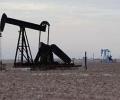
Petroleum minister M Veerappa Moily would like to import 11 million tonnes of Iranian crude in this financial year.

In Bihar, where a bandh had been called, a railway station and a police vehicle were torched, an ambulance attacked and security personnel injured in stone-pelting incidents on the fourth consecutive day of the agitation, while protesters vandalised Ludhiana railway station in Punjab and blocked roads and rail tracks in West Bengal, Haryana, Rajasthan, Maharashtra, Odisha and Uttar Pradesh.
.jpg)
Following adverse media reaction to the June 27 decision of the Cabinet Committee on Economic Affairs, the finance ministry had issued an office memorandum asking the petroleum ministry to see if there was a way to make RIL clear its gas supply backlog at the existing price.
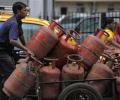
The world's largest cash transfer programme has eliminated around 40 million ghost connections

The country's exports rose by about 6 per cent to a "record" $447 billion during 2022-23 on account of healthy growth in the outbound shipments of sectors such as petroleum, pharma and chemicals and marine, Commerce and Industry Minister Piyush Goyal said on Thursday. The country's imports also grew by 16.5 per cent to $714 billion in 2022-23 as against $613 billion in 2021-22. He said that the exports of goods and services together scaled "new heights" and has increased by 14 per cent to $770 billion in 2022-23 as against 676 billion in 2021-22.

The company is looking to invest more than $3 bn over the next three years.
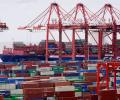
The country's exports surged 49.85 per cent to $35.43 billion in July on account of healthy growth in petroleum, engineering, and gems and jewellery segments, even as the trade deficit widened to $10.97 billion during the month, official data showed on Friday. Imports during the month also rose by about 63 per cent to $46.40 billion, as per the data released by the commerce ministry.

Meghalaya Chief Minister Conrad Sangma on Thursday said Union Home Minister Amit Shah has given firm assurances at a meeting held in Delhi of acting on his request for a Central Bureau of Investigation (CBI) probe into the 'firing by Assam Police' along the states' border.

A 1985-batch Karnataka cadre officer, Kharola would be steering the national airline at a time when the government has started the process for its strategic divestment.

However, WPI inflation remained in double digit for the third consecutive month in July, mainly due to a low base of last year. WPI inflation was (-) 0.25 per cent, in July 2020. "The high rate of inflation in July 2021 is primarily due to low base effect and rise in prices of crude petroleum and natural gas; mineral oils; manufactured products like basic metals; food products; textiles; chemicals and chemical products etc as compared the corresponding month of the previous year," the commerce and industry ministry said in a statement.

Shipments from Russia rose nearly 33 per cent to $1.1 billion in March from $831.17 million in the previous month, which was when the country mounted aggression on Ukraine and faced sanctions from Western nations, the data accessed by Business Standard shows. Growth in imports was largely on account of oil, people aware of the matter said. The Department of Commerce is learnt to have written to the Ministry of Petroleum and Natural Gas (MoPNG), seeking details of imports, including the payment mechanism, which India has not made public.

Vedanta's Cairn Oil & Gas on Thursday announced the appointment of Nick Walker as the new chief executive officer (CEO) of the company. In a statement, the company said the appointment is effective January 5. "Before this appointment, Walker was president and chief executive officer at Lundin Energy, one of the leading European independent E&P companies," it said.

Snapping the two-month easing trend, WPI inflation rose in August and remained in double-digit for the fifth consecutive month. In July 2021, WPI inflation stood at 11.16 per cent. In August 2020, WPI inflation was at 0.41 per cent. "The high rate of inflation in August 2021 is primarily due to rise in prices of non-food articles, mineral oils; crude petroleum and natural gas; manufactured products like basic metals; food products; textiles; chemicals and chemical products etc as compared the corresponding month of the previous year," the commerce and industry ministry said in a statement.
India's exports in January rose 25.28 per cent to $34.50 billion on account of healthy performance by mainly engineering, petroleum and gems and jewellery sectors, even as trade deficit widened to 17.43 billion, according to data released by the commerce ministry on Tuesday. Imports grew by 23.54 per cent to $51.93 billion during the month under review. Trade deficit, difference between imports and exports, stood at $14.50 bn in January 2021.

The government on Thursday said it will "look into" a demand to raise the quota of subsidised LPG cylinders to 12 per household in a year from the current limit of nine, a day after the price of non-subsidised LPG was increased by a steep Rs 220.
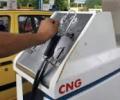
The Petroleum Ministry in an order on Wednesday said it has revised guidelines for allocation/supply of domestic natural gas to city gas distribution entities for CNG and piped cooking gas sector.

India's crude oil import bill is set to exceed $100 billion in the current fiscal year ending March 31, almost double its spending last year, as international oil prices trade at seven-year highs. India spent $94.3 billion in the first 10 months (April-January) of the ongoing financial year that started April 1, 2021, according to data from the oil ministry's Petroleum Planning & Analysis Cell (PPAC). It spent $11.6 billion in January alone when oil prices had started to surge.

Glimpses of the protests in Colombo against the worsening economic crisis

The divestment of Bharat Petroleum Corporation (BPCL) may hit a fuel price hurdle, according to officials dealing with the matter. They pointed out that the inconspicuous administered price regime could hamper the prospects for potential buyers of BPCL. A senior oil ministry official said public-sector oil-marketing companies (OMCs) take a hit when they sell petrol, diesel, and liquefied petroleum gas (LPG), three of the most popular petroleum products in the country.
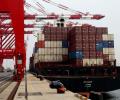
On the back of rising crude oil purchases, India's bill for imports from sanctions-hit Russia jumped 3.5 times in a year in April to $2.3 billion, showed data from the commerce ministry. In April, India's crude oil imports from Russia were valued at $1.3 billion, 57 per cent of India's total inbound shipments from Russia. Other major imported items during the month included coal, soybean and sunflower oil, fertilisers, and non-industrial diamonds. That month, Russia was also the fourth-largest crude petroleum supplier to India, after Iraq, Saudi Arabia, and the United Arab Emirates (UAE).
This will help expand the distribution channels, said Subhash Chandra Khuntia, chairman of the insurance regulatory and development authority of India.

The wholesale price-based inflation eased for the eighth consecutive month to 4.73 per cent in January on easing prices of manufactured items, fuel and power. The wholesale price-index (WPI) based inflation rate was 4.95 per cent in December 2022 and 13.68 per cent in January 2022. Inflation in food articles, however, rose to 2.38 per cent in January, from (-) 1.25 per cent in December, 2022.

The likely solution that appears before the AAP government is to seek for a higher quota of domestic natural gas for Delhi, which would bring down auto and cooking gas prices.

Annapurna Devi, Subhas Sarkar and Rajkumar Ranjan Singh will be the new ministers of state for education.

The wholesale price-based inflation eased to a 29-month low of 1.34 per cent in March on easing prices of manufactured products and fuel items, even though food articles turned expensive.
Exports in June rose by 23.52 per cent to $40.13 billion while the trade deficit ballooned to a record level of $26.18 billion mainly due to jump in gold and crude oil imports, the government data said on Thursday. The country's export growth in May was 20.55 per cent. Imports expanded by 57.55 per cent to $66.31 billion in June compared to the year-ago month, the data showed.

Air India Chairman Rajiv Bansal has been appointed as the new aviation secretary as part of a major top-level bureaucratic reshuffle effected by the Centre on Wednesday. K Rajaraman, additional secretary in the department of economic affairs, has been appointed as secretary, department of telecommunications, a personnel ministry order said.
